BackHon Hai

Hon Hai

Amazon
2026-09-07 00:45:06

Amazon AWS Boosts AI Server Cabinet Orders, Benefiting TSMC and Other Suppliers

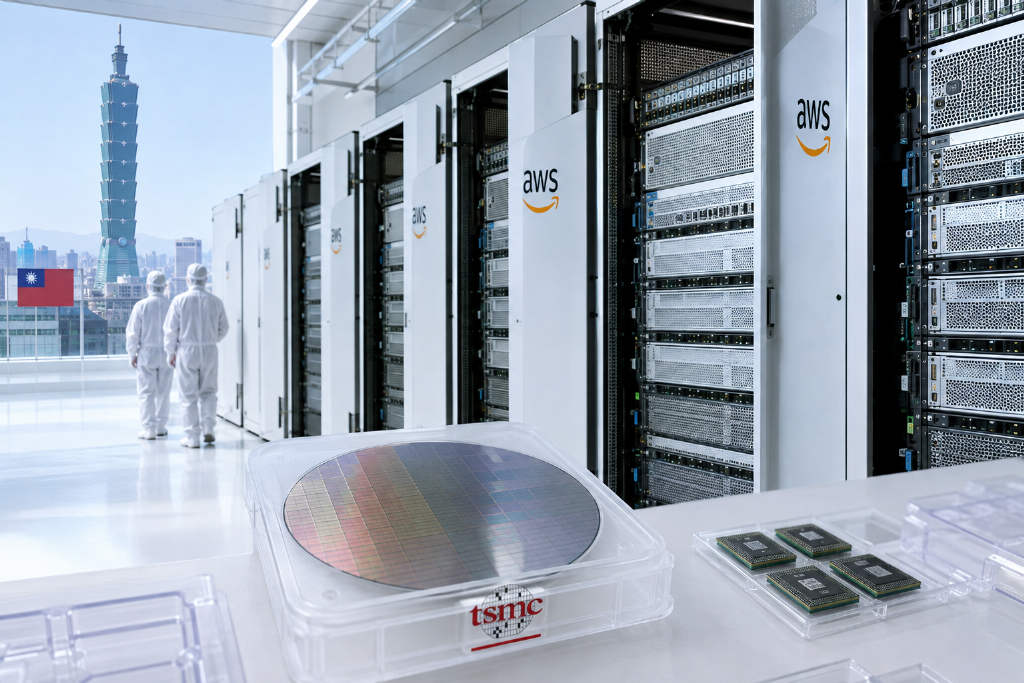
Amazon Web Services has significantly increased its pull-in orders for AI server cabinets, according to supply chain sources, driving strong shipments from key partners including TSMC, Alchip Technologies, Wistron, and Hon Hai. Amazon raised its 2025 capital expenditure forecast to $220 billion, up from $200 billion, primarily for AI infrastructure such as data centers, servers, and networking equipment. CEO Andy Jassy expects AI computing demand to outpace supply through 2027 and into 2028. AWS's AI business and custom chip efforts have grown to $25 billion, maintaining triple-digit growth. Annapurna Labs' custom ASICs are mostly manufactured by TSMC using 3nm process. Alchip Technologies, a crucial partner, forecasts record quarterly revenue and profit. Wistron assembles AWS's ASIC AI cabinets and supplies switch trays, while Hon Hai provides CPU trays. Hon Hai rotating CEO Chiang Chi-heng targets over 40% market share in ASIC servers.
20
Amazon AWS Boosts AI Server Cabinet Orders, Benefiting TSMC and Other Suppliers
AI computing
2026-08-18 08:13:29

Taiwan digital ministry’s free AI computing program enters final application rounds

Taiwan’s Ministry of Digital Affairs, through its Administration for Digital Industries, is nearing the end of applications for its 115 annual free AI computing program, with the final deadline set for Oct. 30. Approved domestic companies can access GPU resources on the government-backed platform free of charge for three months, and may apply more than once depending on their needs. The program supports both model training and inference workloads, allowing applicants to fine-tune open-source models with their own industry data or connect to preinstalled large language models through APIs for application development. According to the agency, by the end of year 114, 186 AI startups and information service providers had used the platform, producing at least 266 models or innovative applications. Remaining application windows now cover two training batches and three inference batches. The platform also includes a mix of local and international open-source models, including TAIDE, FoxBrain, Llama, Phi, Magistral-Small, Gemma 4, and openai/gpt-oss-120b, alongside tools for image and speech recognition.

1270
Taiwan digital ministry’s free AI computing program enters final application rounds
Policy Regula
2026-08-13 06:58:53

Jim Cramer Backs Six AI Infrastructure Names as Taiwan Supply Chain Stocks Rebound First

Jim Cramer said AI data center stocks are drawing attention again after several weeks of weakness, with selling pressure tied to the forced liquidation of leveraged fund Situational Awareness starting to fade. He highlighted Intel, Super Micro, Lumentum, Nebius, CoreWeave and Nvidia as key names regaining traction as company results and financing developments came in stronger than expected. The report said the sector began correcting in late June and stayed weak through July, largely because of liquidity pressure from forced sales. As that unwind nears its end, investor focus has shifted back to operating fundamentals. Intel’s equity sale was reportedly increased from $15 billion to $20 billion on strong demand and fully placed, while Super Micro and Lumentum posted better-than-expected quarterly results. Nebius and CoreWeave also delivered favorable updates. CoreWeave’s earnings were cited as evidence that older-generation Nvidia GPUs are retaining commercial value longer than many had expected. The article also pointed to Nvidia’s recent $500 billion financing plan with six global asset managers to support treating compute infrastructure as collateralizable physical assets. At the macro level, softer U.S. CPI data eased rate pressure, helping growth stocks. In Taiwan, server, cooling and optical communications suppliers had already rebounded ahead of the latest move in U.S. AI infrastructure shares.

880
Jim Cramer Backs Six AI Infrastructure Names as Taiwan Supply Chain Stocks Rebound First
Norway sovere
2026-08-13 00:53:01

Norway wealth fund lifts Taiwan stock holdings to $61.9 billion as TSMC stays a top global position

Norway’s sovereign wealth fund reported total assets of $2.34 trillion for the first half of 2026, with a 9.4% investment return and profit of $184.9 billion. The fund’s Taiwan equity holdings rose 50.7% to $61.914 billion, or roughly NT$2 trillion, increasing Taiwan’s share in its global equity portfolio to 3.68%. TSMC remained the fund’s fifth-largest holding worldwide at $33.525 billion and was the only non-U.S. company among its top five positions, accounting for 1.7% of total assets. In Taiwan, the top five positions were TSMC, MediaTek, Delta Electronics, Hon Hai and Yageo. MediaTek climbed to the No. 2 Taiwan holding at $3.183 billion, while Yageo’s position value jumped 426% to $1.12 billion, moving from 18th at the end of the prior year to fifth. The fund held 333 Taiwan-listed stocks as of June 30, 2026. First-half portfolio changes included 14 additions and 20 removals. New positions were concentrated in AI server-related supply chains, including passive components, optical communications, PCB and semiconductor testing materials, memory, connectors and thermal modules. Stocks removed from the portfolio included names tied to autos, precision machinery, aerospace, green energy and energy storage, reflecting a sharper focus on AI-linked technology segments.

1040
Norway wealth fund lifts Taiwan stock holdings to $61.9 billion as TSMC stays a top global position
SpaceX
2026-08-12 04:48:20

Jefferies says SpaceX and CoreWeave may buy AI servers directly from Taiwan ODMs from 2027

Jefferies said in a new supply-chain survey that SpaceX and CoreWeave are discussing a shift in AI server procurement that would bypass Dell and move directly to Taiwanese original design manufacturers, with the change potentially starting in 2027. The report named Hon Hai, Quanta, Wiwynn, and Wistron as the companies in talks with the two buyers. Jefferies said the first products under the new model could be VR200 racks built on NVIDIA’s Vera Rubin architecture. The bank said the change would fit a procurement pattern already used by hyperscalers such as Google, Meta, and Microsoft, which often buy servers directly from Taiwan-based ODMs rather than through branded OEM vendors. For the four ODMs, Jefferies described the supply-chain shift as a broad positive even though they will still compete for allocation. It also estimated average selling prices for Vera Rubin-generation racks at $8 million to $9 million per rack, versus about $3 million for current GB200 NVL72 systems. For Dell, Jefferies framed the issue as market-share loss rather than weakening demand for AI servers. The report also said GB300 shipments are accelerating and projected that Hon Hai could ship 15,000 to 20,000 GB300 racks in the second half of 2026, with further growth in 2027.

1270
Jefferies says SpaceX and CoreWeave may buy AI servers directly from Taiwan ODMs from 2027
Lin Congji
2026-08-11 08:03:11

King Slide chairman Lin Congji tops Taiwan rich list with $16.7 billion fortune

Forbes’ real-time billionaire rankings on Aug. 11 put King Slide Works chairman Lin Congji at the top of Taiwan’s rich list with an estimated net worth of $16.7 billion, or about NT$538.7 billion. The 85-year-old industrialist moved ahead of Yageo chairman Pierre Chen and Hon Hai founder Terry Gou, according to the report. His rise has been tied not to chips or consumer electronics, but to server rack rails, a niche hardware component that has become increasingly important as AI servers grow heavier and more expensive. The report traces Lin’s path from a furniture factory apprentice in Kaohsiung to the founder of King Slide in 1986. A major turning point came in 2001, when the company won an emergency trial order of about $100,000 from Compaq after another supplier ran into design trouble. That order helped push King Slide into the global server supply chain. The article also highlighted the company’s recent financial performance, including a 87.42% gross margin in the second quarter of 2026, first-half net profit of NT$10.574 billion, and revenue of NT$22.687 billion in the first seven months of the year.

1280
King Slide chairman Lin Congji tops Taiwan rich list with $16.7 billion fortune
BNT vaccine
2026-08-09 05:19:10

17 Indicted in BNT Vaccine Procurement Fraud Case as Tzu Chi Is Alleged to Have Been Swindled Out of NT$1.06 Billion

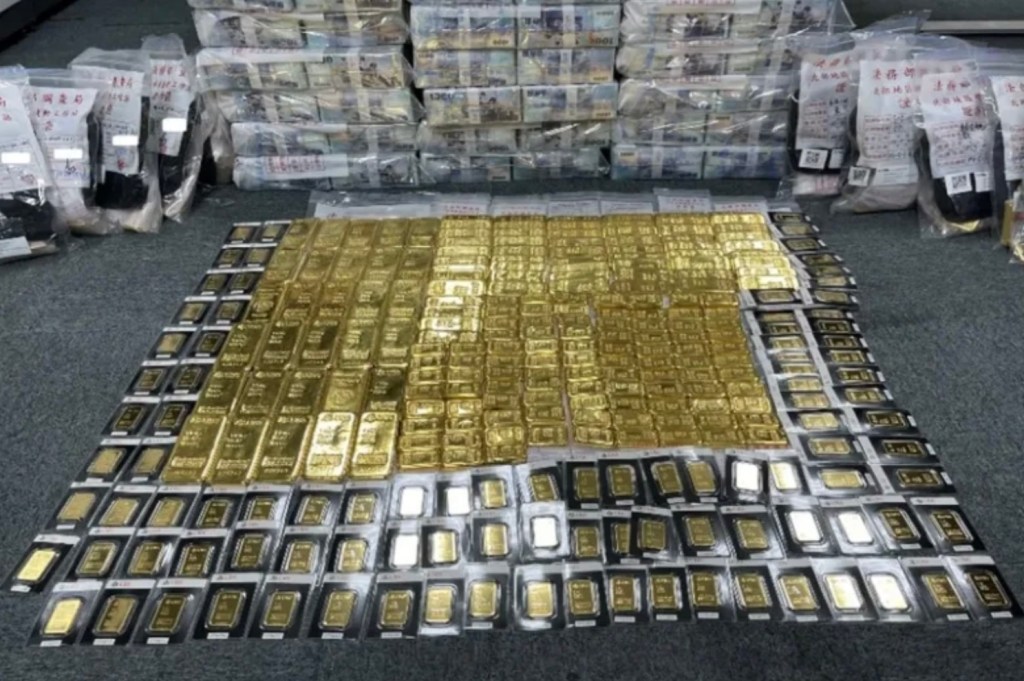
Taiwan prosecutors have indicted 17 people in a major fraud case tied to BNT vaccine procurement during the 2021 COVID-19 outbreak. According to the case details, former Changhua Bar Association chairman Chen Yu-hsuan and alleged fake broker Li Yi-ru claimed they had access to procurement channels through Shanghai Fosun and could help secure BNT doses for TSMC and Hon Hai. Investigators said the pair used a shell company called Yuda to obtain a $30 million consulting fee from the Tzu Chi Foundation, equivalent to about NT$1.06 billion. Prosecutors have charged the defendants with fraud, money laundering, and tax evasion, and have seized more than NT$1 billion in cash, gold, and other assets. The case has also drawn scrutiny over why Tzu Chi did not report the matter earlier and over differences in vaccine budget figures. Tzu Chi said it had not realized it had been defrauded until investigators traced suspicious fund flows and later verified the transactions with the foundation. Former health official Chen Shih-chung said Tzu Chi was a victim in the case. Separately, York University associate professor Shen Jung-chin questioned why Tzu Chi’s budget for 5 million BNT doses appeared higher than the disclosed budgets of TSMC and Hon Hai, while also including a separate service fee.

430
17 Indicted in BNT Vaccine Procurement Fraud Case as Tzu Chi Is Alleged to Have Been Swindled Out of NT$1.06 Billion
Bain Capital
2026-07-29 10:33:08

Bain Capital exits Kioxia in July with estimated $17 billion gain

Bain Capital has fully exited Japanese memory maker Kioxia, closing out a deal that began with Toshiba’s distressed sale of its storage business and ended during one of the hottest runs the memory sector has seen in years. According to the article, Bain had sold down its position by early July after starting a large-scale reduction in November 2025. Nikkei estimated the firm’s gain from the share sale at about JPY 2.5 trillion, or roughly $17 billion. The report traces the investment back to 2018, when a Bain-led consortium that included SK hynix, Apple, Dell and Seagate acquired about 55% of Toshiba Memory for $18 billion. Toshiba Memory was later renamed Kioxia in 2019. At the time, the deal drew skepticism because the memory market was already sliding as smartphone demand softened and NAND prices weakened. That picture changed after AI-driven demand reshaped the storage market. The article says HBM demand surged from the second half of 2025, pushing major suppliers to shift capacity toward higher-end products and tightening consumer storage supply. It also reviews Kioxia’s repeated failed IPO attempts, Bain’s long holding period, and compares that patience with the path taken by investors in China’s CXMT.

1240
Bain Capital exits Kioxia in July with estimated $17 billion gain